
There is a particular kind of find that archaeologists don’t talk about enough.
Not the burial chambers, the golden masks, the inscribed tablets. Those make the headlines. The ones that stay with me are silent. The fire pit used for cooking, then used for burning archive tablets, then abandoned. A palace storeroom with grain still inside it. A port city whose trade records simply stop — mid-accounting cycle, mid-sentence — as if someone put down the stylus to deal with something and never came back.
That last detail is from Ugarit.
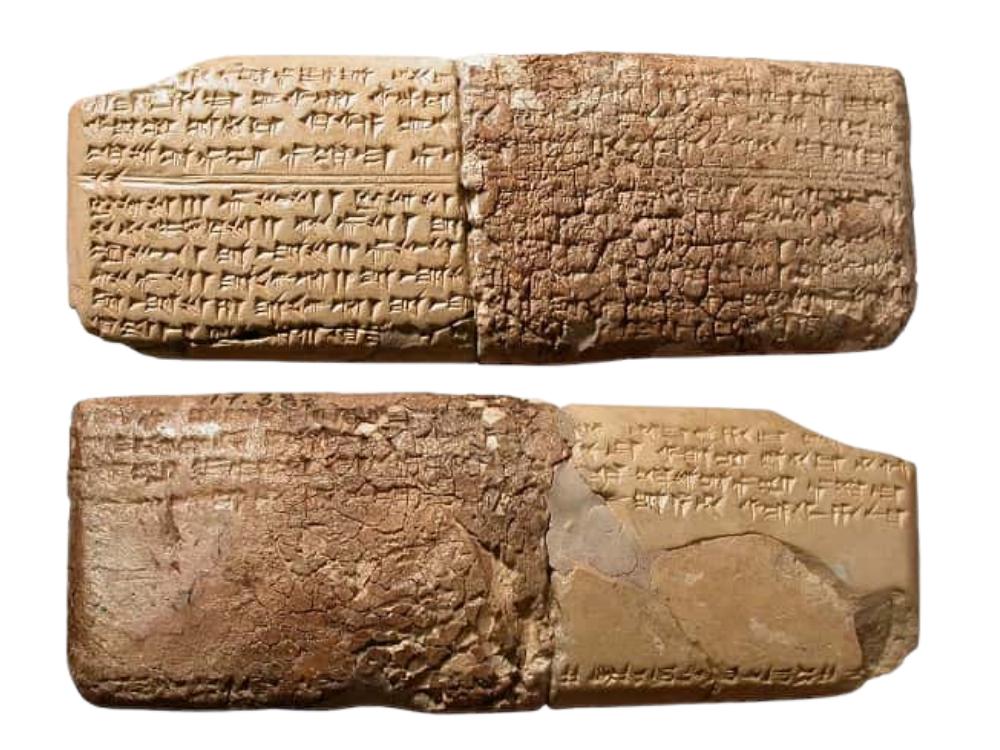
Around 1185 BCE, one of the most cosmopolitan cities in the ancient world, a trading hub connecting Egypt, Anatolia, Cyprus, the Aegean, and Mesopotamia, sent a letter to the King of Alashiya asking for ships and soldiers.
The enemy has been sighted at sea.
The reply, advising calm, was found still in its clay envelope, unread, in the ruins. Ugarit was destroyed before the letter could be opened.
The city was never rebuilt. The site was not reoccupied in any significant way. An entire civilisational node, gone, with the mail still sitting on the table.
That is what systems collapse looks like up close.
What made me look into systems collapse

Just recently I visited Mexico for the second time, exploring all the possible archeological sites on my way: Tulum, Ek Balam, Chichen Itza, Uxmal, Teotihuacan etc. While I was deeply fascinated with the complex systems within the Mayan society, such as the calendars that required extraordinary pattern recognition, triggering more of my neurodivergent interest, there was another question ringing at the back of my head.
All the time.
I just kept thinking: something wasn’t adding up.
Ancient societies were far more complex than older, flattening narratives ever allowed. That does not mean every sensational claim is true, and it is worth being careful here. Some finds are solid and genuinely striking: large quantities of mica at Teotihuacan, for instance, and the discovery of liquid mercury beneath the Feathered Serpent Pyramid, both of which suggest a society with sophisticated symbolic systems, technical knowledge, and far-reaching access to materials. They do not, by themselves, prove some lost global civilisation or implausible travel theory. They do, however, remind us how much organisation, planning, and cultural complexity these societies were capable of.
Other claims belong in a different category. The reports of cocaine and tobacco residues in Egyptian mummies and tombs are highly disputed, and most archaeologists do not treat them as accepted evidence of transatlantic trade. Still, even setting that aside, the broader point remains. These were not simple societies fumbling toward complexity. They were already complex, already intelligent, already operating at scales of logistics, ritual, and coordination that we are still trying to reconstruct properly. That was the question pressing on me as I kept exploring:
How did systems collapse, when handled by such intelligent people? And even more: might we be next?
The myth of the dramatic ending
We are trained, culturally, to think of collapse as an event. A date. An invasion.
Same way as we think of WW1 and WW2. That it started on July 28, 1914, with the assassination of Archduke Ferdinand. That WW2 started on September 1, 1939, when Germany invaded Poland. It looks simple when you’re reading the history books, but in reality it’s more complicated than that.
When asked about WW1 and WW2, the people of the time didn’t notice the exact moment when it started. It was gradual, until it was already happening. Same can be said with systems collapse.
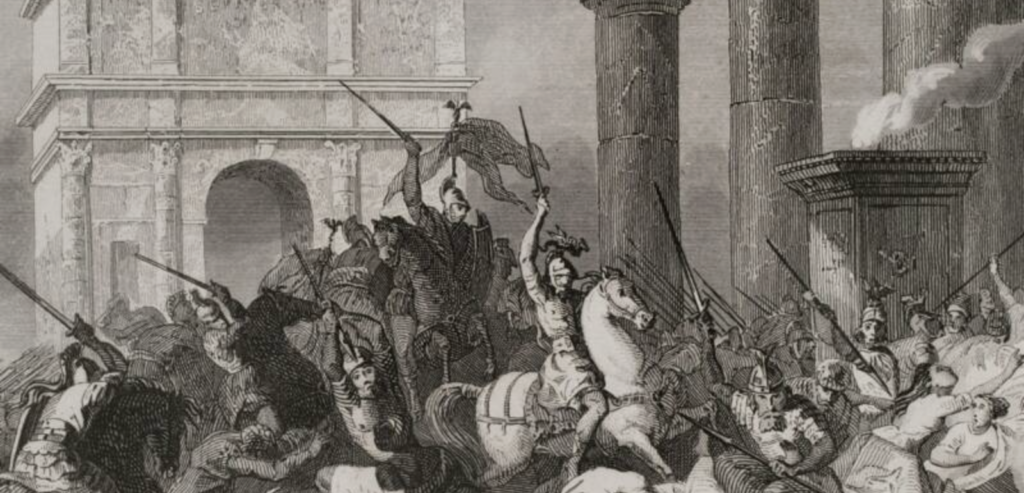
The Western Roman Empire falls in 476 CE. The Mycenaean palaces burn around 1200 BCE. The Maya abandon their cities. History curriculum needs chapter breaks, and collapse provides them.
The archaeological record is much stranger and more disturbing than that.
What you find, again and again, is not a clean ending but a fraying. Systems begin to behave erratically. Administrative records become less frequent, then sparse, then stop. Luxury goods that had been moving along trade routes for centuries disappear from the archaeological layers. Monumental building, the most reliable indicator of surplus, centralisation, and confidence in the future, slows, then ceases. Populations don’t always die. In many cases they simply leave, dispersing into smaller, less legible settlements. You stop finding them not because they ceased to exist but because they stopped producing the kind of evidence complex societies leave behind.
This is what Joseph Tainter means when he describes collapse not as catastrophe but as simplification. A society under stress sheds complexity. It stops maintaining what it cannot afford to maintain. It contracts to a scale it can actually sustain. From inside, that probably feels like survival. From outside, centuries later, it looks like the end of a world.
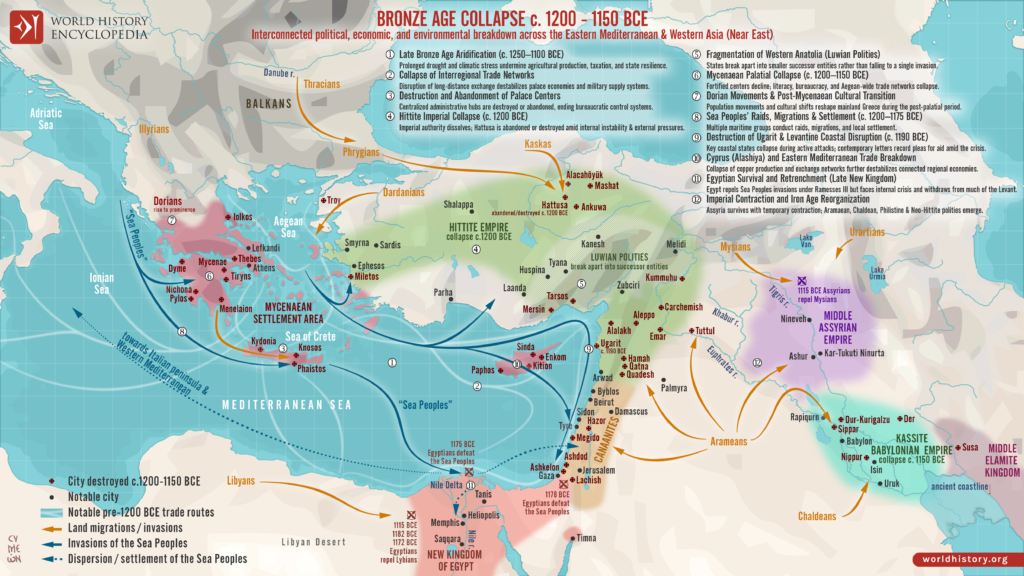
The Bronze Age Collapse — the systemic unravelling of virtually every major Eastern Mediterranean civilisation between roughly 1200 and 1150 BCE — is the most dramatic example we have of this. Within about fifty years, the Mycenaean palace system collapsed, the Hittite Empire ceased to exist, Egypt survived but shrank and never fully recovered its imperial reach, and more than a dozen significant cities along the Levantine coast were destroyed, abandoned, or both. Linear B, the script the Mycenaeans used for palace administration, disappeared entirely with the bureaucracy that had produced it. Writing itself vanished from Greece for roughly four centuries.
Four centuries of silence.
What caused it? This is where it gets genuinely strange, and genuinely instructive.
The conspiracy theory that turned out to be true (and then more complicated)
For most of the 20th century, the preferred explanation for the Bronze Age Collapse was the Sea Peoples — a term used in Egyptian records to describe raiders and migrants who appear in inscriptions from the reign of Ramesses III, depicted in vivid battle reliefs at Medinet Habu. They came from the sea. They destroyed everything. Case closed.
Except: the Sea Peoples were real, but the story doesn’t hold.
(Side note: the next novel I’m planning to write after “Other Island” touches specifically this legend, so if that speaks to you, then you might want to join my newsletter).
The problem is sequencing. The Hittite capital of Hattusa shows no evidence of massive assault — it appears to have been deliberately evacuated and then burned, possibly by its own inhabitants. Ugarit was destroyed, yes, but the tablets found there include correspondence indicating the Hittites were already in trouble before any sea-borne attackers arrived. The Egyptian records that describe the Sea Peoples were written after the events, by a regime with obvious propaganda motivations.
What Eric Cline’s exhaustive synthesis of the evidence in 1177 B.C. suggests is something more uncomfortable: there was no single cause. There were many simultaneous stresses — climate-driven drought (confirmed by recent paleoclimatological studies showing a prolonged dry period across the Eastern Mediterranean), internal rebellions, disrupted trade networks, and yes, migrations of displaced peoples. But the critical point is that the system was already vulnerable. It was so tightly interconnected: tin from Afghanistan, copper from Cyprus, grain from Egypt, luxury goods moving between courts via diplomatic exchange — that disruption anywhere propagated everywhere.
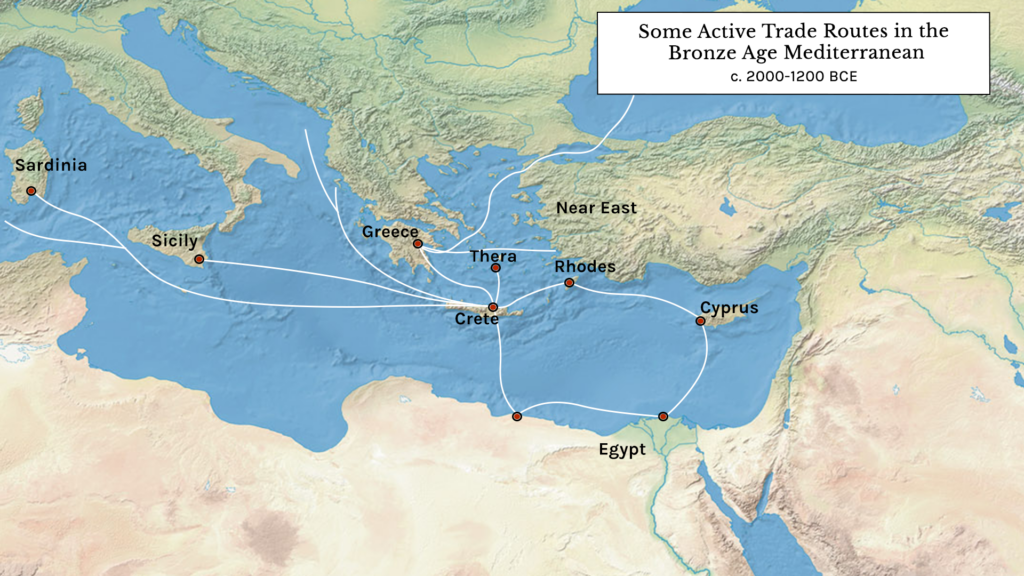
This is not a conspiracy. It is something more unsettling than a conspiracy. A conspiracy implies an agent, a plan, a direction. What happened to the Bronze Age world was emergent failure. No one designed it. No one was in control of it. It happened because a network optimised for efficiency had become catastrophically fragile.
That distinction matters enormously for how we think about complex systems.
What Tainter actually argues (and why it’s more radical than it sounds)
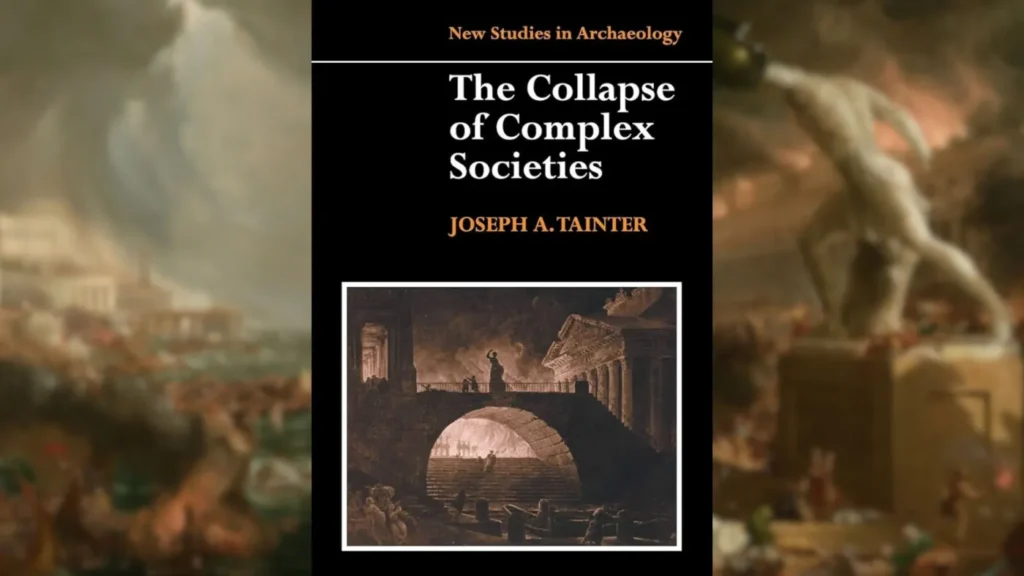
Joseph Tainter’s The Collapse of Complex Societies is one of the most subversive books written in the social sciences in the last fifty years.
His argument is not that civilisations collapse because of bad leaders, or invasions, or environmental catastrophe, though all of those can be triggers. His argument is structural: complex societies collapse because complexity itself has diminishing returns.
Here is the logic. Societies solve problems by becoming more complex. Drought? Build irrigation. Warfare? Build armies and bureaucracies. Disease? Build medical systems and supply chains. Each solution requires more administration, more specialisation, more infrastructure. For a time, the investment pays off. The returns on added complexity are positive.
But complexity has costs. More administrators need feeding. More infrastructure needs maintaining. More specialisation creates more interdependence, which creates more fragility. At some point — and Tainter argues this is a structural inevitability, not a contingent accident — the marginal return on added complexity turns negative. You are spending more resources maintaining the system than the system is generating.
At that point, collapse is not failure. It is, in Tainter’s unsettling formulation, a rational response to a failing system. The people who walk away from the palace, who stop sending their grain surplus, who refuse to maintain the roads — they are not making an irrational choice. They are responding rationally to the fact that the complex system is no longer working for them.
This is the part that keeps me up at night. Collapse is not imposed from outside. It is, in some meaningful sense, chosen — not collectively, not consciously, but through millions of small individual decisions that, in aggregate, withdraw the support a complex system requires to sustain itself.
So the dreaded question is:
How does this apply to our society now?
Societies solve problems by becoming more complex. Complex societies collapse because complexity itself has diminishing returns.
Peter Turchin’s secular cycles and the part nobody wants to discuss
Peter Turchin is a mathematician who decided to apply quantitative methods to history, and the results are uncomfortable reading if you are living through what he describes.
His cliodynamics framework identifies roughly 200-year cycles in complex societies, what he calls secular cycles. A period of growth and integration is followed by a period of stagnation and disintegration. The disintegration phase is characterised by specific, measurable indicators: wage stagnation among the majority, rapid multiplication of elites competing for a fixed number of positions of power (elite overproduction), declining institutional trust, and rising political instability.
Does that ring a bell? Laughs uncomfortably.
The trigger for collapse, in Turchin’s model, is not primarily external. It is internal. A society in which too many people with elite aspirations and education are competing for too few elite positions generates extraordinary political turbulence. Those who lose the competition have every incentive to delegitimise the system. Those who win have every incentive to pull up the ladder behind them. Neither group is behaving irrationally. Both groups are destroying the conditions that made their own prosperity possible.
His data-driven analysis, published in Ages of Discord, suggests the United States entered a disintegration phase some decades ago. Whether you find that persuasive or alarmist is partly a question of what data you weight and partly a question of how uncomfortable you are willing to be.
What I find most useful in Turchin is not the prediction but the diagnosis: that the conditions which produce collapse are legible in advance. They are not hidden. They show up in the distribution of wealth, in the functioning of institutions, in the relationship between citizens and the structures that are supposed to serve them. Collapse does not arrive from nowhere. It arrives from a system that had been signalling its own fragility for decades.
Too much information, and the problem no previous civilisation had to solve
Every collapse I have described involved, at some level, a failure of information.
The Bronze Age system failed partly because the information networks — the diplomatic correspondence, the merchant records, the palace accounting — could not carry warnings fast enough or comprehensively enough to coordinate a response. By the time the letter from Ugarit asking for ships arrived in Alashiya, Ugarit was already burning.
The Roman Empire failed partly because it grew too large to administer coherently. Information from the frontiers reached the centre slowly and unreliably. By the time the emperor knew what was happening on the Rhine or the Danube, the situation had already changed.
The present has the opposite problem.
There is no shortage of information. There is, in many ways, too much of it. The problem is not transmission speed — it is epistemic fragmentation. Competing narratives, algorithmic filtering, deliberate disinformation at scale, and the sheer cognitive overload of an information environment in which everything is happening simultaneously and nothing resolves.
Previous civilisations failed because they couldn’t know. We may be developing a failure mode in which we know everything and can agree on nothing. Coordination becomes impossible not because information is absent but because shared meaning has collapsed.
That is a genuinely new form of fragility. We do not have historical precedent for it at this scale.
Artificial intelligence sits uncomfortably inside this. It offers tools for pattern recognition and prediction that no previous civilisation possessed. It also offers tools for generating disinformation at scale, for concentrating decision-making power, for creating opacity in systems that require transparency to function. Whether it stabilises or destabilises complex systems is not a settled question. It may do both, in different domains, simultaneously.

What collapse feels like from inside
I keep coming back to this, because it is the part most relevant to writing fiction set in a world under pressure.
Collapse does not feel like an ending. It feels like friction.
The historian Bryan Ward-Perkins, in The Fall of Rome and the End of Civilisation, makes the deeply unfashionable argument that the end of Roman civilisation in the West was genuinely catastrophic for the people who lived through it — not a transition, not a transformation, but a collapse in the material quality of life that took centuries to recover from. Pottery, previously mass-produced to a high standard, reverts to hand-formed local ware. Literacy rates fall. Long-distance trade stops. Buildings become smaller and less durable. People’s teeth, which provide a remarkably accurate record of nutritional stress, show the change.
But the people living through it did not know they were living through a collapse. They knew that the roads were harder to maintain. That the market for luxury goods had contracted. That certain officials were no longer performing certain functions. That trust had to be placed more locally because larger structures had become unreliable.
Life continued. It just did so with more effort, and with diminishing expectations about what effort could produce.
That compression of expectation — the way people adjust their sense of what is normal downward, incrementally, without ever quite naming the moment when things got worse — is one of the most psychologically precise things archaeology documents, and one of the hardest to write about.
Patterns of systems collapse: intellectual decline, trade drops, issues with teeth: what does it have to do with us?
If you’re saying that people’s teeth show the change, we’re safe, right?
No, we’re not. If, according to archeological evidence, systems collapse correlates to rise of teeth issues, then we might indeed be living in a time of systems collapse:
- In England, tooth decay was the leading cause of hospital admission among children aged 5 to 9 in 2024/25, ahead of acute tonsillitis, according to figures highlighted by the Royal College of Surgeons of England from NHS data.
- Access is part of the problem. Official NHS Dental Statistics for England 2024/25 show that 6.9 million children were seen by an NHS dentist in the 12 months to 31 March 2025, equivalent to 57% of the child population in England. Put differently, about 43% were not seen in that period.
- When routine care becomes hard to access, people improvise. In 2024, the British Dental Association said 82% of 500 UK dentists surveyed had treated patients who had attempted some form of “DIY dentistry” since lockdown. Reported examples included using superglue to mend a crown, pliers to remove teeth, chewing gum as a temporary filling, and even trying to make dentures at home.
Fine, there are many reasons why people’s teeth might be going bad, such as sugar. It doesn’t prove anything. Surely we’re only getting smarter. Right?
- A 2023 study by researchers affiliated with Northwestern University, published in the journal Intelligence, analysed cognitive test data from 394,378 U.S. adults collected between 2006 and 2018. The study found evidence consistent with a reverse Flynn effect in some domains, with declines in matrix reasoning, letter and number series, and, in the Northwestern summary, verbal reasoning, while 3D rotation scores generally increased in the later 2011–2018 period. The authors also cautioned that this does not automatically mean Americans are “less intelligent”; it means the pattern of scores has shifted, and the cause is not straightforward.
- You can see a related pattern in education data, though it is measuring something different. In PISA 2022, the OECD reported a record drop in mathematics and a major decline in reading, while also noting that downward trajectories in reading and science had already begun before the pandemic. In the United States, NAEP likewise found continued declines in reading and said the reading slide had begun prior to COVID. None of these measures are identical, and they should not be treated as if they were. Still, taken together, they point in the same uncomfortable direction: something was already weakening before the pandemic made it easier to notice.
Fine, but it’s more nuanced than that. This external brain we’re getting from AI might just be the next evolutionary step, helping us grow as a society. Right?
I’m glad you asked.
Now what does all of this have to do with AI?
Quite a lot, actually.
Part of what made the Bronze Age collapse so devastating was not only war, drought, or political fragmentation, but the loss of administrative capacity. These were societies held together by coordination: scribes, records, logistics, taxation, storage, redistribution, diplomacy. Once enough of that machinery became too expensive, too fragile, or too broken to maintain, complexity itself became harder to sustain. The system did not simply lose wealth. It lost the ability to manage itself.
Do you see where I’m going with this?
Because AI, at its core, is not just a novelty machine or a chatbot or a threat to white-collar jobs. It is a coordination technology. A way of processing information, managing complexity, predicting patterns, automating forms of labour that used to require enormous human administrative effort. In that sense, it may turn out to be historically unusual: a tool that allows a society to preserve or even expand complexity at a moment when demographic decline, institutional fatigue, and cognitive overload are already making human coordination harder.
If historically systems have collapsed due to these economical factors of not being able to maintain enough scribes or military personel, then AI might just be the resource that might keep us above the water with our current systems collapse.
But doesn’t that mean that AI takes over all the jobs and most people end up starving?
First off, I’m not claiming either is going to happen. See this as an evidence-based thought experiment. Now let’s try to put some of the factors we’re dealing with together:
- Part of the reason why climate change is happening is because of the human population size
- We’re experiencing population decline, which for many countries is a red flag for their economy, as the younger population won’t be able to support the old generation
- Global warming is leading us to the sixth mass extinction wave, which would completely shake the system we live in, creating even more struggle with food
But the decline in population wouldn’t be a problem for the economy, if AI stepped up, wouldn’t it? It would lead to positive impact on our climate change situation, at the same time the population decline will go hand in hand with the falling number of jobs.
Of course, it’s more nuanced than that. We might need to go through hell in order to reach that point. Nobody knows what will happen in a couple of years. But what I’m saying this: it seems there might be light in the end of this tunnel.
Things are connecting.
If you enjoy this kind of thinking
Imagine a world of matriarchy, where WW1 never happened because of the actions of one unhinged woman who hated war and suffering. A novel that touches on different artifacts and archaeological discoveries that have been wrongly interpreted, attributing the past more to patriarchy than it truly was. And a neurodivergent academic girl with unlimited curiosity, who’s trying to survive a system that makes no sense to her.
I’ve been putting all of my passions and research into my dark archeological adventure novel “Other Island“. If that sounds like something you’d enjoy, I recommend to subscribe to my newsletter to get an email when it’s published.

Leave a Reply