

📖 Reading the World | Month: North Korea
Doing research for a novel often means wandering into books you never meant to pick up. Sometimes you begin with questions about plot or setting, and end up learning something far more difficult: how people survive inside systems that were built to crush them.
This year, I set myself a challenge: one memoir or novel a month, each from a different country. I want to understand how people live inside worlds unlike my own, what they fear, what they endure, what keeps them going when life narrows into pure survival.
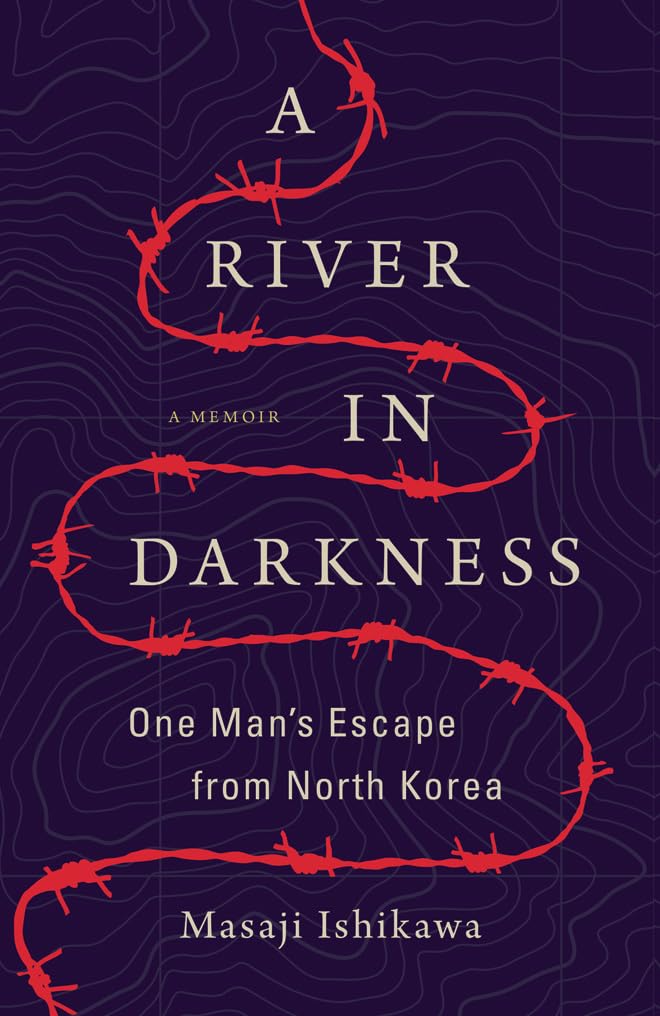
I had been circling North Korea for a while. The themes sit uncomfortably close to the ones I am exploring in Other Island, the dystopian alternative history novel I’m writing: isolation, closed systems, and people shaped by realities they never chose. So I picked up River In Darkness by Masaji Ishikawa, and it changed the way I think about survival on the page.
Content warning: this book and article include themes of starvation, abuse, and suicide.
What Is This Book?
River In Darkness is a memoir by Masaji Ishikawa, who was born in Japan and taken to North Korea as a child during the repatriation programme that promised families a better life. The book recounts what followed: hunger, humiliation, labour, grief, and the long psychological damage of living inside a system that made dignity feel almost unreachable.
I expected a political book. What I found was something more devastating: a human one. Not because politics are absent, but because the machinery of the regime is felt most sharply through the body, the family, and the slow erosion of hope.
Memoir translated into English by Kāt Bandō
You don’t choose to be born. You just are. And your birth is your destiny, some say. I say the hell with that. And I should know. I was born not just one but five times. And five times I learned the same lesson. Sometimes in life, you have to grab your so-called destiny by the throat and wring its neck.
MASAJI ISHIKAWA, AUTHOR OF THE MEMOIR
Before the Story Begins: How 93,000 People Boarded Ships to Paradise
In December 1959, two Soviet ships left the port of Niigata, Japan, as a brass band played and families wept tears of joy on the dock. Nearly a thousand people were on board, heading to North Korea. Not as prisoners, not as refugees, but voluntarily. Eagerly. They had been promised paradise.
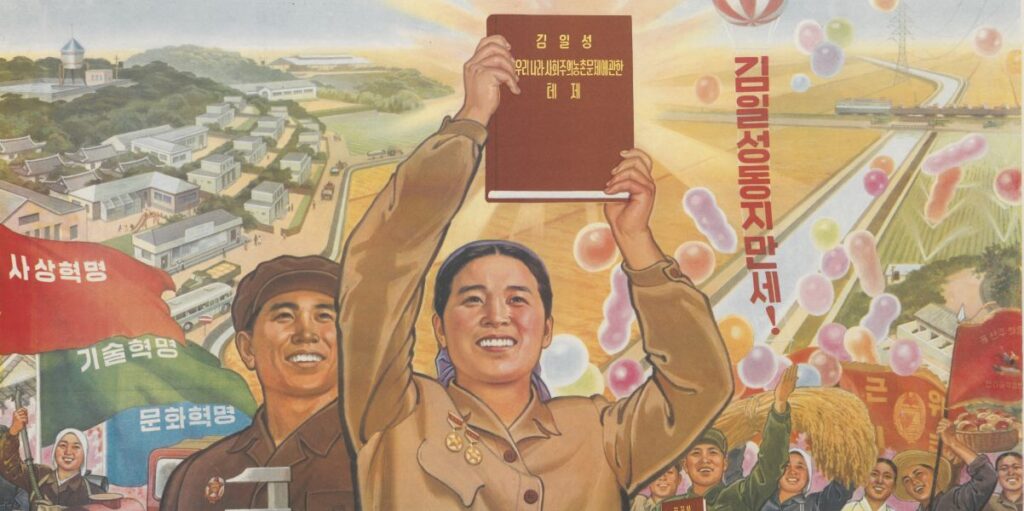
The campaign was called, without irony, Paradise on Earth. It was run by North Korea’s pro-Pyongyang association in Japan, endorsed by the Red Cross societies of both countries, and dressed up as a humanitarian repatriation project. Posters and pamphlets described a thriving socialist state: free education, guaranteed work, equality. Propaganda films showed an idyllic life. Door-to-door agents visited Korean families across Japan. The message was consistent and persuasive: come home to the socialist fatherland.
So they went. Between 1959 and 1984, 93,340 people, including some 1,800 Japanese spouses and around 6,800 Japanese citizens, relocated to North Korea under this programme. In 1960 alone, over 49,000 people made the crossing.
What they found when the ships docked was not paradise. Within a few years, families in Japan stopped hearing from their loved ones. Those who later escaped described hunger, political surveillance, and forced relocations. Many Japanese spouses never saw their families again. Communication was severed. Their existence, as one account put it, slowly faded into silence.
The vast majority never returned.
And the story of River In Darkness tells the tale of a Japanese boy, who was forced to move to North Korea by his Korean father. Along with his sisters and mother, they experienced a reality far worse than any nightmare.
When you find yourself caught in a crazy system dreamed up by dangerous lunatics, you just do what you’re told.
On Injustice So Deep It Becomes Normal
I want to be honest here: parts of this book are difficult to sit with. When it comes to literature, I purposely seek out the darkest corners of human history and human condition, and this one unsettled even me.
The depth of injustice described is… extensive, to say the least. When you’re reading this memoir, all the time you might find yourself thinking: it couldn’t possibly get any worse, and then on the next page it does.
The worst part is: those people had to live through it.
I found myself crying more than once.
As I looked at my mother’s frail body, I was struck by her ratty, hole-ridden pants. I felt so sorry for her. I mean, she had died in those decrepit, tattered work pants. I couldn’t bear it.
As a Japanese boy, the author of this memoir experienced never-ending injustice. It didn’t matter how hard he worked at school or work. Society had defined a class system that a person could never escape. And being Japanese-born, one would always stick to the bottom. And so, the story in part became a fight for keeping scraps of his dignity.
But it’s also a story of incredible resilience. Of extraordinary creativity when it came to survival. And of a reality so strange and surreal, one can truly feel they entered a different reality, when it’s something that happened, and perhaps still happens, in our world.
We had placed her coffin the following afternoon. I tried to hammer the lid down, but the stupid nails were inferior and wouldn’t go straight. To me, that said it all. As for my mother, she hadn’t enjoyed a single luxury since she’d moved to North Korea. I couldn’t stop thinking about it. Had she experienced a single good day in her entire life? Or had her whole life been no better than her ragged work pants? Tattered pants… wretched life.
On Creativity Under the Most Extreme Constraint — and Why This Changed My Novel
This is where River In Darkness became something I hadn’t expected: a masterclass in human ingenuity.
When resources are stripped down to almost nothing, creativity doesn’t disappear. It finds new territory. The author describes, across different points of the book, the improvisation required to survive — including around food. What to eat when there is nothing recognisable to eat. How to make something edible out of what others would discard without a second glance. The inventiveness is extraordinary, and it’s not performed — it comes from pure necessity.
Here’s how you make it. First, boil the pine bark for as long as possible to get rid of all the toxins. (Many people botched this stage and died in agony as a result). Next, add some cornstarch and steam the evil brew. Then cool it, form it into cakes, and eat it. This was easier said than done. The pine oil stinks to high heaven and makes it almost impossible to consume it. But if you wanted to live, you choked it down.
It had never quite crossed my mind how creative people can get when it comes to cooking solely to survive. Reading this memoir sharpened the way I think about my protagonist, who’s been starving for as long as she can remember. So she’s become creative, too.
Specifically, she collects crickets and other bugs, and she is — genuinely, seriously — a connoisseur. She has methods. She is creative in the way that people are creative when their creativity operates in a space that most people never look at.
This is where it connected to the challenges in my novel. Learning about the different ways crickets can be cooked, especially ways that might feel specific and believable on the page, has definitely been a journey.
I had been writing this character before I read this book. But reading River In Darkness gave me something I didn’t know I was missing: a clearer understanding of what it means to find sophistication inside constraint. To not merely tolerate what others find repulsive, but to become an expert in it. To learn the textures and limits of survival.
After reading this book, I rewrote several scenes. My protagonist’s relationship with her ingredients became more specific. The fact that I have eaten crickets, grasshoppers, worms, and many other bugs probably helps.
On the Depths of What One Person Can Endure
What stays with me, weeks after finishing the book, is not a single scene or moment. It’s the cumulative weight of it. This one part in particular, that I’ve shared below, was disturbing in its rawness and loss of dignity.
It was then that I decided to go back to the kiln, back to a world of hard work and silence. Back to cutting down trees and branches and carrying them on my back, shoving them in the kiln, and drinking away the pain in my back and my heart. I just wanted to do something honest and pure, something that I couldn’t be reprimanded for. But somehow, even when I got back to my hermit’s life, I couldn’t help but think about that returnee who’d ignored me. It was stupid to dwell on that. Of all the insults I’d endured in my life, hers was hardly the worst. But I couldn’t. She’d made a point of ignoring me. She acted as if I didn’t exist at all, even when I stood right in front of her. That moment seemed to sum up my entire existence. I was nothing. Less than nothing. Whatever I did was a waste of time. A waste of effort.
The book showed the resilience of the author, and the accumulation of things that most people wouldn’t be able to survive, and how it finally got to him. I won’t quote the moment that followed, for it gets too personal and raw. But trust me when I say this: it only keeps getting worse.
Why I’ll Keep Reading About North Korea and What’s Next
This won’t be the last North Korean memoir I read.
There is something about this particular closed world that keeps pulling at me — not as a morbid fascination, but as a writer trying to understand the extreme end of what systems do to people. Every defector memoir is an act of translation: someone trying to explain a reality so different from the one the reader inhabits that the language barely stretches to cover it. That act of translation interests me deeply. It’s close to what I’m trying to do in fiction.
📖 Next month: I haven’t decided yet. Leave a comment if you have a country you think I should read from — memoir, novel, anything. I’m listening.
If you’re curious where all this research is leading: I’m writing Other Island, a dystopian alternative history novel about a neurodivergent academic girl who refuses to accept injustice as part of the system. Having to choose between doing the right thing or not messing up her future, Morgan goes on a journey of uncovering the truth behind a government conspiracy and a strange social experiment.
Learn more about “Other Island”

Leave a Reply