
When it comes to excellent storytelling, Attack on Titan is my Roman Empire. Between the morally complex characters, lore and thematic depth, it’s both a story that I devoured and one I can’t stop thinking about.
In this series of articles I’ll explore and dissect different aspects of Attack on Titan, figuring out what makes it tick — which also helps me become a better writer for my upcoming novel Other Island. And the first aspect I’ll dissect is a central driver of the AOT plot: Eren’s goal.
Warning: this article includes possible spoilers for Attack on Titan.
What was Eren’s goal?
When understanding his goal, it’s important to distinguish the concrete objective from the deeper life-driving desire.
- Concrete objective: join the Scout Regiment
- Deeper life-driving desire: freedom beyond the walls
This is Eren’s goal at the start of the story. And as the story progresses, you might notice something quite peculiar — that Eren’s goals might transform on the surface, but at the core they always stay the same.
He wanted to join the scouts as part of his quest for freedom. After his mother died, another goal joined the first: kill all titans, and do that by joining the scouts. On the surface it might not seem the same as freedom, but in reality it’s directly connected. In Eren’s mind, killing all titans means gaining freedom.
How this goal changes over time yet stays the same
One might think that the moment Eren discovers he’s a titan himself, his goal to “kill all titans” would change. But it doesn’t.
Then, when he discovers that all titans are humans, he slowly goes from wanting to kill all titans to wanting to kill all enemies of his kind.
It might seem like his goal shifted. But in reality it’s just semantics. At the core, Eren’s goal was always to kill those who opposed his freedom. Who kept him in a cage. He thought those were the titans, but he had been mistaken.
The goal remained.
What drove this goal?
The core reason why Eren was so obsessed with freedom was his wound. He hated being trapped in a cage.
But the wound runs deeper than the walls themselves. His mother died while he watched, helpless — too small, too trapped to do anything. That specific helplessness is where it starts. The freedom obsession is the scar tissue over it. The walls became the symbol of everything that could be taken from him while he stood there unable to act.
He said: humanity is the cattle. And his unhinged personality took that belief further than anyone else would have.
So what is the takeaway from this?
Eren is a central source of intrigue in Attack on Titan. His obsession drives the story. There isn’t a moment when his agency doesn’t overflow.
But one of the biggest reasons why the story is so compelling is that his goal never actually changes. The perspective shifts, the target shifts, the scale grows enormous — but the thing underneath it all stays exactly the same. That consistency is what makes him feel real rather than constructed. Real people don’t transform their core drives. They just find new things to aim them at.
And I find that deeply fascinating.
In Other Island, my protagonist operates on a similar principle. Her goal transforms as the story forces her hand — but the thing driving it, the wound underneath, stays the same from the first page to the last. Building that took a long time to figure out. Eren helped.
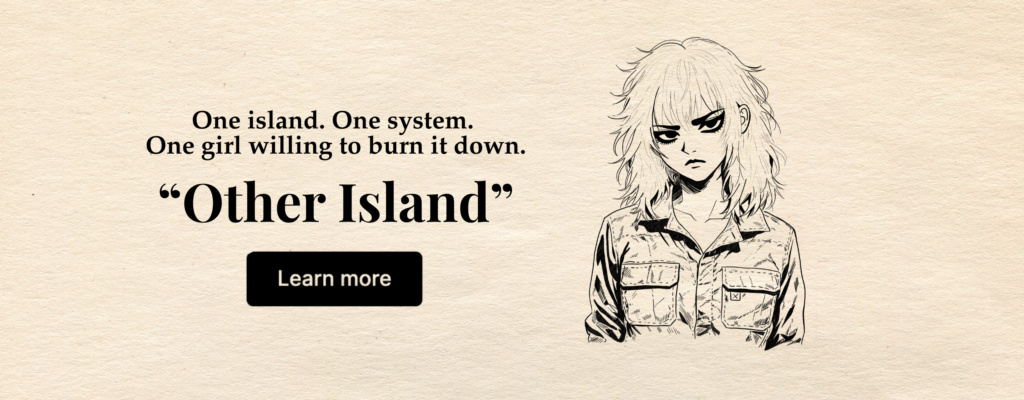
If that sounds like your kind of story, you can learn more about Other Island here. And if you want to read the next part of this series, subscribe to my newsletter.

Leave a Reply