

I’ll be honest here. One of the main reasons why I got that annual MasterClass membership was because I wanted to watch writing lessons by Margaret Atwood. I’ll be even more honest. I’m obsessed with her. The way she reasons, the way she writes, the way she thinks about writing.
And nothing about these writing lectures was a disappointment. I learned so much. And there were plenty of things that surprised me.
If you love Atwood’s books, or first came to her through The Handmaid’s Tale series, you probably already know what makes her fiction linger. It is not just the worldbuilding. It is not just the intelligence. It is not even just the elegance of the prose. It is the feeling that the book knows more than it is saying. That it has roots. That it is built on old bones, old fears, old stories. The MasterClass makes that clearer. It also makes one thing painfully obvious: she does not write carelessly. Even when she sounds relaxed, she is exact.
I certainly learned a lot from it. More than I expected to.
Here are the lessons that stayed with me.
But first about Margaret Atwood
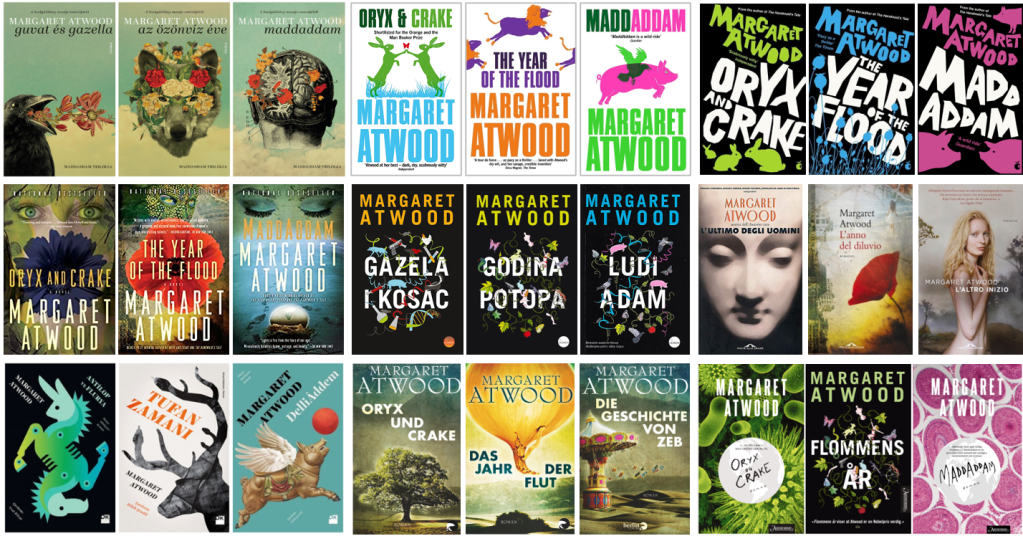
Margaret Atwood is one of those writers you eventually run into whether you plan to or not. The Handmaid’s Tale tends to be the entry point for most people, but once you step further in, you realise how wide her range actually is. Novels, essays, poetry, speculative fiction that feels uncomfortably close to reality. She has been writing for decades, and not in a way that feels dated. If anything, her work has aged into relevance in ways that are a little unsettling.
What I find more interesting than her reputation, though, is how she thinks about writing. There is nothing precious about it. No romantic fog. She approaches fiction as something built, tested, revised, sometimes discarded entirely if it is not working. At the same time, she never reduces it to a system. She understands structure, but she does not worship it. She respects old stories, but she is not afraid to bend them. And when she talks about craft, it tends to come from experience rather than theory.
That combination is rare. It is one thing to write important books. It is another to be able to explain, in very plain language, what actually goes into making them.
The thing that broke open first: she does not begin with ideas
Margaret Atwood is very clear that she does not start with themes or concepts. She begins with characters, voices, images — sometimes a single charged object — and the ideas arrive later, discovered by readers once the book is already standing.
This cracked something open for me, because I have been guilty of the opposite. I started Other Island knowing, quite precisely, what it was about. I had a thesis. I had thematic intentions. And for a long time I could not understand why certain sections felt stiff. Intelligent, maybe, but airless. Too solved.
Reading Atwood’s reasoning, I realised I had been writing arguments in novel clothing. The scenes where I started from an image rather than a point. A specific smell in a specific corridor, a woman’s hands doing something ordinary while something extraordinary is implied. Those are the scenes that hold. The ones where I knew what I meant to say before I started are the ones I am currently cutting.
Starting from something alive rather than something explainable is not mystical advice. It is structural. A novel built on an image has room to surprise you. A novel built on a thesis does not.
On drafting fast and throwing things away
Margaret Atwood describes early drafting as downhill skiing. The point is forward motion. You go fast, you don’t stop to correct, you get the material out of hiding, and only then do you shape it.
The other thing she says, which I find more useful: the wastepaper basket is your friend. Try techniques. Try voices. Keep what works. Throw out what doesn’t, without sentiment.
I have spent three weeks sitting with a chapter in Other Island that I know is wrong. I have been protecting it because it was hard to write and because it arrived in a form I found interesting. Atwood’s phrasing, very plain, very unsentimental, made the decision obvious. The chapter doesn’t work. The pages are not there to be admired for having been difficult. They are there to do a job. That chapter is now in a folder called “dead ends” and the novel is already moving better without it.
The pattern-break principle, and why it applies scene by scene
A story begins when a pattern breaks. Not once, at the opening, but continuously, at every level.
Margaret Atwood frames this almost like a diagnostic: if nothing is rupturing, intruding, tilting the existing order, you don’t have narrative yet. You have a state of being, which can be beautifully written and still inert.
I use this now as a revision tool. I go scene by scene and ask: what breaks here? What has changed by the end of this scene that couldn’t have been predicted from its beginning? When I can’t answer that, the scene is doing decoration rather than work.
Other Island is set on an island that is, without giving too much away, not quite the island it appears to be. The pattern-break principle matters especially in that kind of world, because the temptation is to spend chapters establishing atmosphere and texture without disturbing anything. The world feels built. But nothing is happening to it. Atwood’s framework helped me identify which chapters were set-dressing and which were story.
Point of view: whose voice, to whom, and why
Margaret Atwood moves POV out of the technical lane almost immediately. It’s not first-person versus third. It’s: who is speaking, to whom, and why.
Once you ask why, everything shifts. A first-person voice stops being a stylistic choice and becomes motive. Testimony. Self-justification. Performance. Even third person stops feeling neutral, distance becomes strategy. What is being withheld, and why?
Other Island is in close third. For a long time I couldn’t articulate why that felt right. Working through Atwood’s framework, I found the answer: my narrator withholds in a specific, motivated way. The distance is not aesthetic. It is protective of the protagonist, of the reader, of something I don’t want named too early. Knowing that has made revision much cleaner. Now when I sense the POV is too transparent, I know what I’m protecting and can choose how to guard it.
She also mentions, matter-of-factly, that she wrote roughly a hundred pages of Alias Grace in third person before realising it was simply the wrong person for that book. She threw them out and started again in first.
A hundred pages.
I think about that every time I am tempted to keep something because of the effort it cost me.
What speculative fiction actually requires
This is where Atwood’s thinking feels most distinctive, and most relevant to what I’m writing.
She describes speculative fiction as dealing with possibilities already latent in the present. Not imagined futures dropped in from outside, but tendencies that exist now, in seed form, followed further down the road. The horror is always recognisable. That is the point. The reader can feel where the fiction began.
Other Island sits in this territory. Not quite realist, not quite elsewhere, a place that feels like it could be real if you looked at it in a slightly different light. Atwood’s framework clarified something I had been feeling without being able to name: the strangeness has to have roots. I can’t just build an eerie atmosphere and call it speculative. The unsettling elements need to trace back to something actual: a fear, a system, a way that power actually moves. When they do, the invented world feels inevitable. When they don’t, it just feels odd.
The revision question she asks that I can’t shake
Margaret Atwood reduces revision to one question: is it alive or dead?
Everything else can be fixed. Grammar, pacing, dialogue, structure — all fixable. But if the section has no life in it, no forward pressure, no force, then all the line-editing in the world produces cleaner inertia.
This is harder to apply than it sounds. It requires you to stop hiding behind craft concerns, the sentence that almost works, the transition that needs attention, and face the simpler, more frightening question about whether the passage is doing anything.
I have started reading my drafts with only that question. Alive or dead? Some pages I haven’t been able to decide, which I now think means dead. If the life were there, I would feel it.
The underwear detail, and why research has its place
I learned from this class that people’s underpants used to fall off as they walked, because of how they were designed. This is the kind of detail that makes historical fiction either convincing or fraudulent, and it arrived because Atwood is very good at talking about research.
Her point is not that research doesn’t matter. It does, enormously. It’s that research has a timing problem. Done too early and too thoroughly, it becomes its own kind of avoidance. You are still dealing with the material. Nothing vulnerable has happened on the page yet.
Her approach: get the draft moving first. Go with your best memory. Research later, and use what you find to make the reader believe the world, not to prove how much you know about it. The distinction matters. Research on the page that announces itself is research that failed to become fiction.
A note on what the class is and isn’t
I came away from Atwood’s MasterClass with clearer thinking, not a system. That is not a criticism. It is precisely why it has stayed with me. Systems for writing have always made me anxious. They promise shape in exchange for your instincts, and I am not sure that is a good trade.
What Margaret Atwood offers instead is a way of looking at fiction until it starts telling on itself. She teaches you to hear when the book goes thin, when it starts performing instead of living, when a voice has the right sound but the wrong motive. Those are not rules. They are forms of attention. They age differently than rules do: they do not become wrong as your work changes. They sharpen.
If you want to take the class yourself, you can find Margaret Atwood’s MasterClass here:
👉 Margaret Atwood’s MasterClass
And if you are the kind of reader who is drawn to dystopian fiction, old story-shapes, uneasy worlds, and books with a slightly gothic pulse, all of this has been feeding directly into my own novel, Other Island, while I edit it.
If you’d like to peek at that world, you can check out the page for my book here:
👉 Learn more about “Other Island”

Leave a Reply